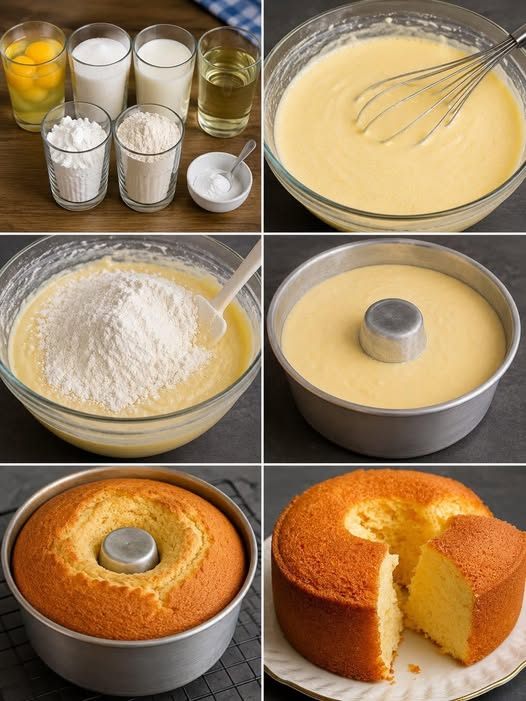
This loaf is the perfect fusion of two bakery classics – crisp, buttery croissants and tangy, chewy sourdough. With golden, flaky layers and a slight tang from the sourdough starter, Sourdough Croissant Bread is a rich and flavorful loaf you will love.
I first had the idea for this croissant loaf when I grating butter for my sourdough scones and thought – “Why don’t I add this butter into a sourdough loaf instead?” And it was a very good idea. The tender crumb inside is light and airy, yet substantial enough to hold its shape. The delicate, buttery layers offer a satisfying crunch, while still maintaining your favorite subtle sourdough flavor.
The concept took off almost instantly – this croissant-style loaf has since gone viral across the sourdough community and social media, inspiring bakers everywhere to try it for themselves.

Why You’ll Love Croissant Bread
- Buttery and Soft – This recipe incorporates cold butter during the stretch and folds, which results in buttery soft layers. If you love this recipe, try another enriched sourdough recipe like my Sourdough Brioche or make my Honey Butter Sourdough Focaccia that is based on this recipe!
- Flavor and Texture – Sourdough Croissant Bread is a combination of two of my favorite baked goods, and the union reminds me of another favorite – my Chocolate Chip Sourdough Brioche – or my Sourdough Chocolate Croissant Rolls!
- Easier than Traditional Croissants- While it’s hard to beat a good traditional sourdough croissant, they do take time and have a high level of precision and difficulty. This recipe is so much easier with a similar flavor, kind of like my Sourdough Bagel Bread that’s even easier than regular sourdough bagels.
- Versatile Loaf – Just like with my traditional Sourdough Bread, this loaf is perfect for sandwiches, toast, or a swirled loaf – like my Nutella Sourdough Loaf. Or try adding in some inclusions like my Ham and Cheese Sourdough Croissant Loaf, my favorite Almond Sourdough Croissant Loaf, or my Sourdough Panettone Bread.

Important Ingredients
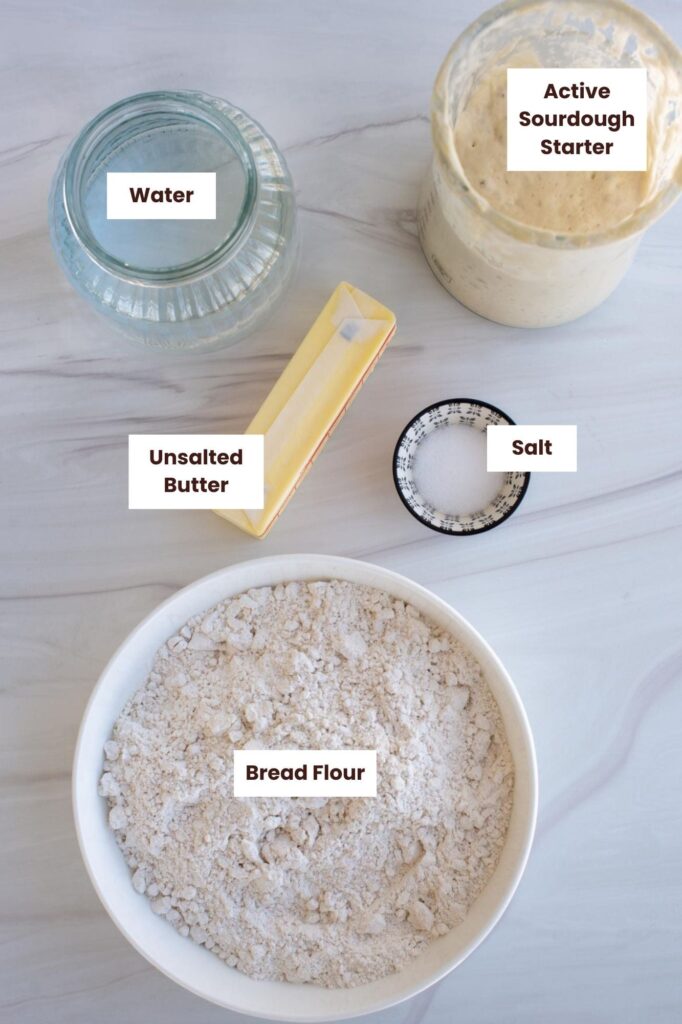
- Levain – This recipe uses a levain that combines ripe and active sourdough starter, flour, and room temperature water and is left to rise before using.
- Unsalted Butter – The key to the flaky layers that give this loaf its croissant texture is unsalted butter. I prefer to bake with unsalted butter, but you can also use salted butter if you prefer. This recipe works for both American-style butter that has more water content and European-style butter. The American-style will have more chunks/flakes throughout the dough, but both bake up delicious.
Substitutions
- Levain: Instead of levain, you can substitute equal amounts of active and bubbly sourdough starter for the levain in this recipe.
- Unsalted Butter: Substitute salted butter instead of unsalted butter if you prefer.
- Bread Flour: This loaf would also work with all-purpose flour. I would decrease the water by about 20 grams if substituting all-purpose flour for the bread flour.
- Add-Ins: Try adding in some chocolate chips, chopped pecans or any favorite mix-in will work in this loaf. Learn how to add inclusions to sourdough bread here and scroll down for a section on how I make this loaf into a pain au chocolate croissant-style loaf. You can also add bloomed cocoa powder to make a chocolate sourdough croissant loaf if you are a chocolate lover!
Sourdough Baker’s Timeline
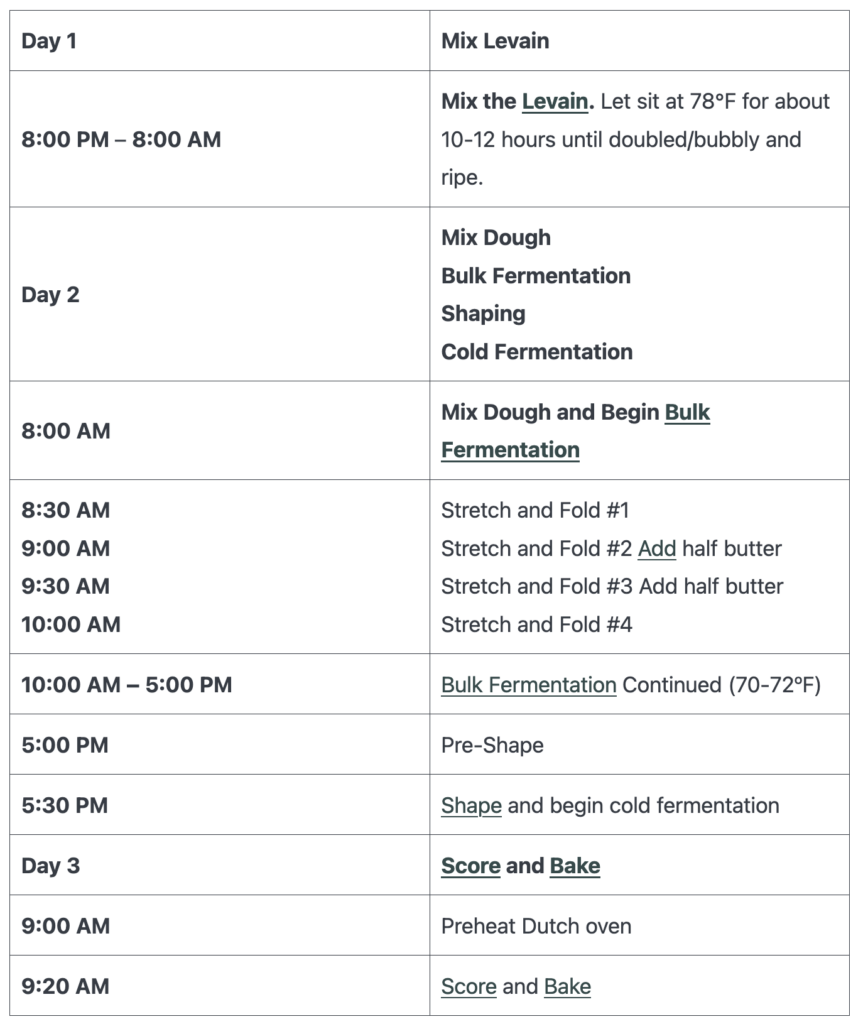
A sample baking schedule helps me when baking with sourdough. Sourdough takes much longer to rise than commercial yeast bread. This schedule helps me plan my bake. This recipe is loosely based off of my recipe for my traditional sourdough bread.
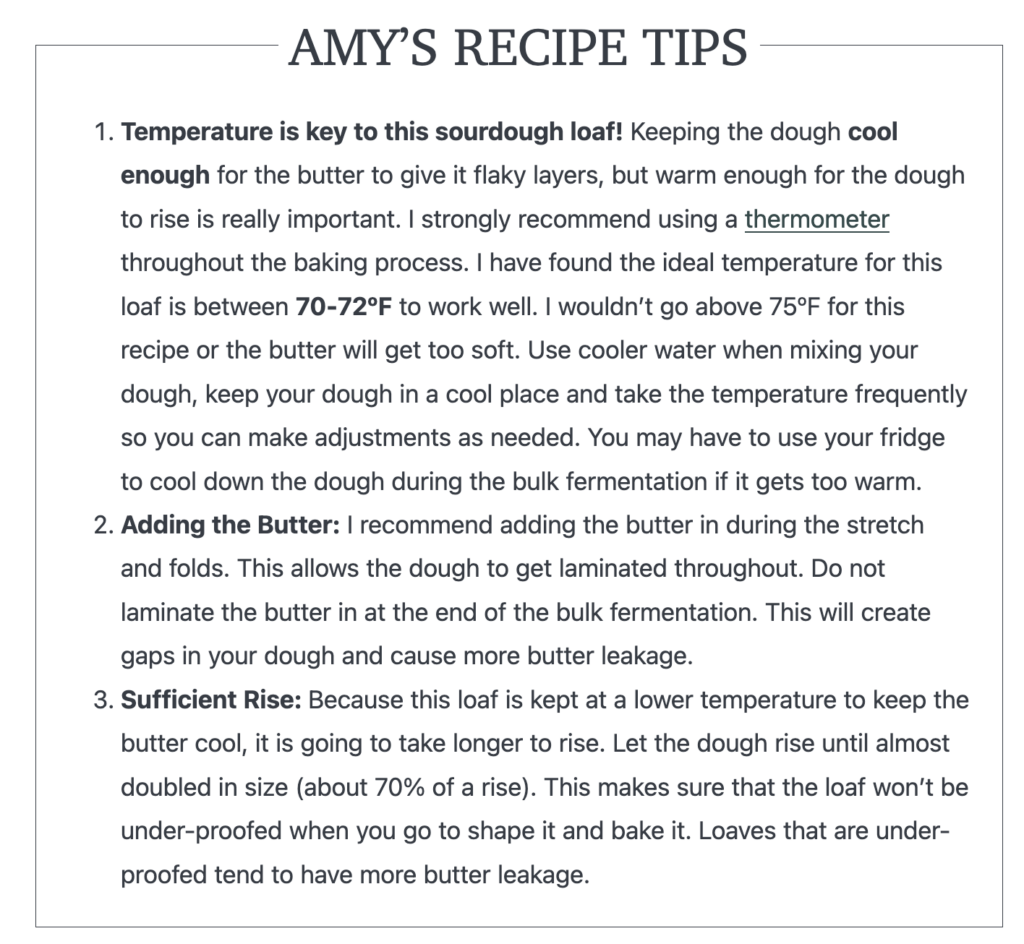
A few notes: I typically keep my dough in the 78-80ºF temperature range. This does not work well for this dough because you want the butter to stay relatively chilled and not melt. Instead for this loaf the dough temperature is 70-72°F throughout the process, which is reflected in the baking timeline.
If you are new to sourdough, learn how to make a sourdough starter from scratch and how a sourdough starter works in my Free Sourdough Beginner Guide. Using naturally fermented sourdough will take much longer, but you will love the fermentation benefits and the flavor!
How to Make Sourdough Croissant Bread
Mix the Levain
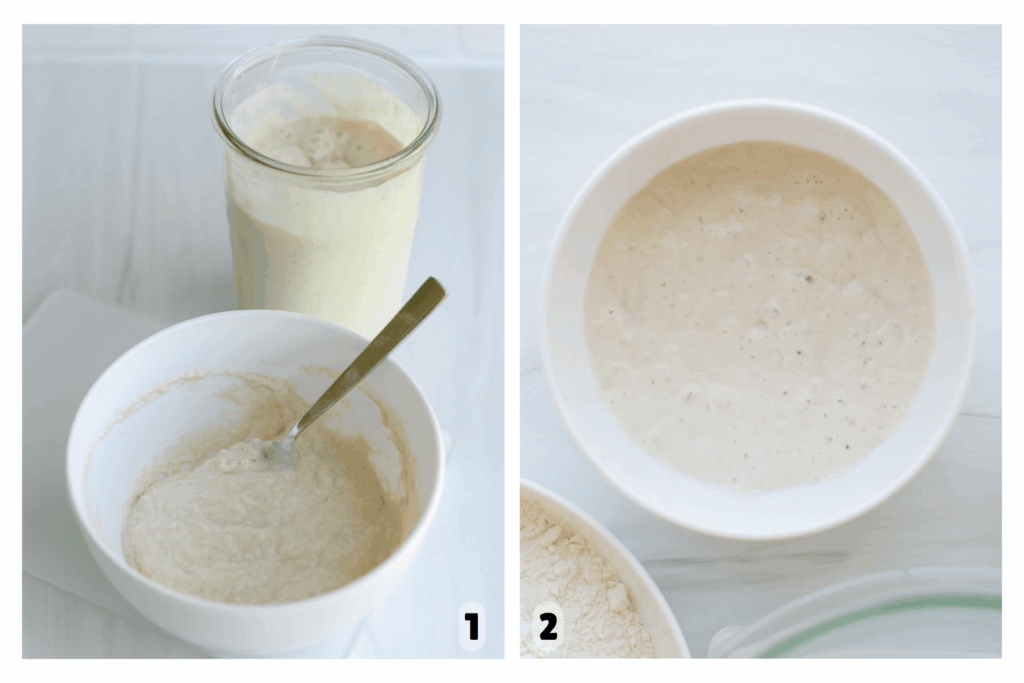
Step 1: Mix Levain. Combine ripe sourdough starter with water and flour to prepare your levain (Image 1). Let rise until bubbly and active (Image 2).
Do you have to use a levain in this recipe? No. I prefer it, but if you have a well-maintained and frequently refreshed sourdough starter, you can substitute it in place of the levain in the recipe.
Mix Dough & Bulk Fermentation
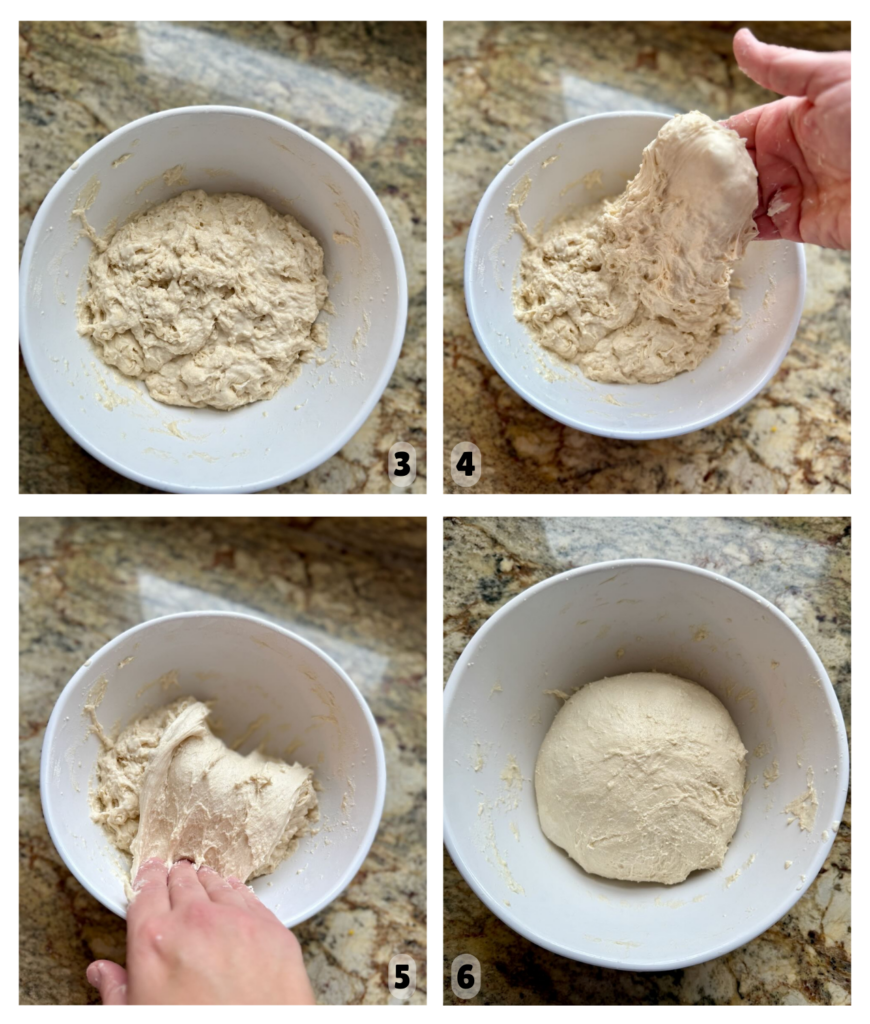
Step 2: Mix Dough. Combine ripe levain, water, salt, and bread flour to a large bowl and use a dough whisk to combine until a shaggy dough forms (Image 3). Cover and let rest for 30 minutes.
Step 3: Stretch & Folds. Over a period of about 1 ½ hours, perform a series of “stretch and folds” by reaching to the bottom of the bowl (Image 4) and pulling the dough up to fold over on itself (Image 5). Continue turning the bowl and folding the dough about four times for each round of stretch and folds. Cover and wait 30 minutes between each set of stretch and folds, allowing the dough to become more cohesive and elastic over time (Image 6).
Note: If you want to add an autolyse or fermentolyse to this dough and some vigorous mixing – it will only increase the strength and gluten network in the dough. I use these processes in my Classic Sourdough Bread and they also work well in this loaf. I didn’t include them in the recipe steps because this loaf is already fairly complicated with monitoring temperature and bulk fermentation and I wanted to keep the recipe approachable for most bakers.
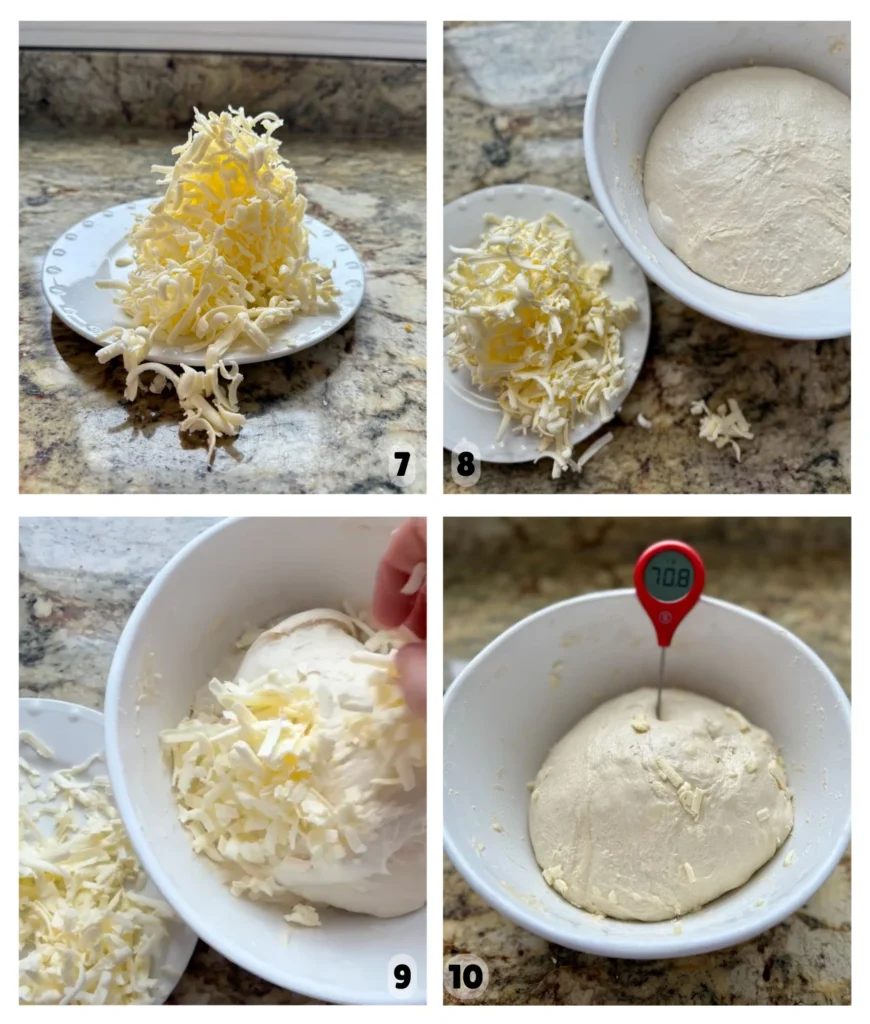
Add in the Butter: Before your second set of stretch and folds, grate cold or frozen butter (Image 7) and add half of it to the dough (Image 8). Allow the other half to chill in the refrigerator until you add it during the third round of stretch and folds (Image 9). Cover and let dough rise for 6-7 more hours until it has risen about 70% and has scattered bubbles on top.
Note: Temperature is really important for this loaf! I’ve found a 70-72°F temperature to work well. I wouldn’t go above 75°F for this recipe or the butter will get too soft. To do this, use cooler water when mixing your dough, keep the dough in a cool place and take the temperature with a thermometer throughout the process (Image 10).
Shaping The Dough
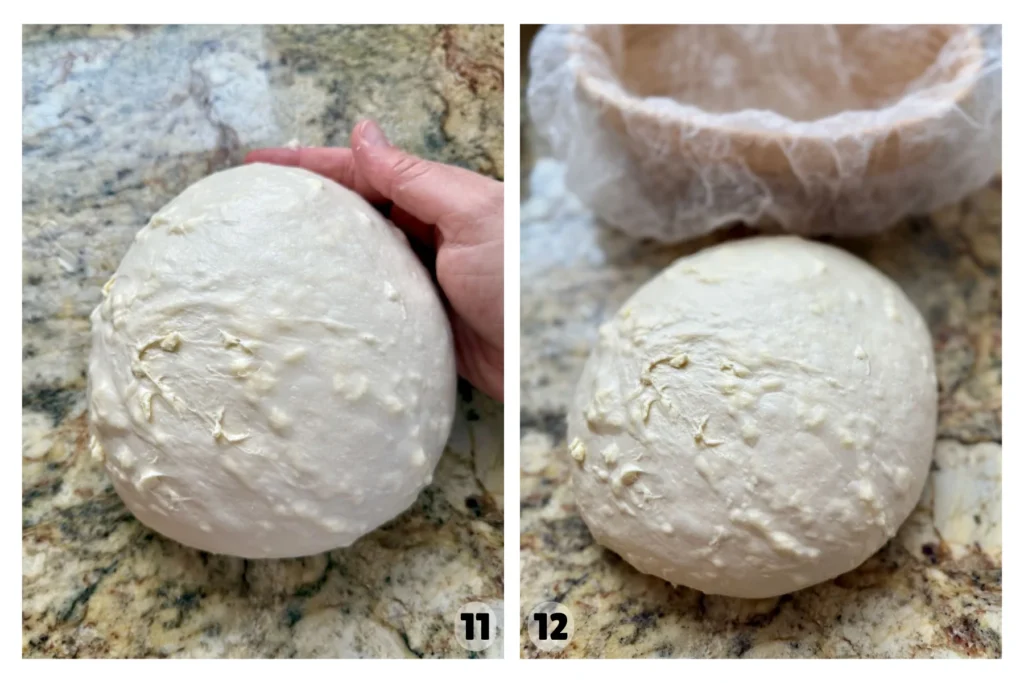
Step 4: Pre-shape & Bench Rest. Let dough rest on a clean counter surface. Use a bench knife to tuck the dough under itself and introduce some tension into the dough, forming the dough into a circle (Image 11). Let the dough rest uncovered for about 30 minutes at room temperature (Image 12).
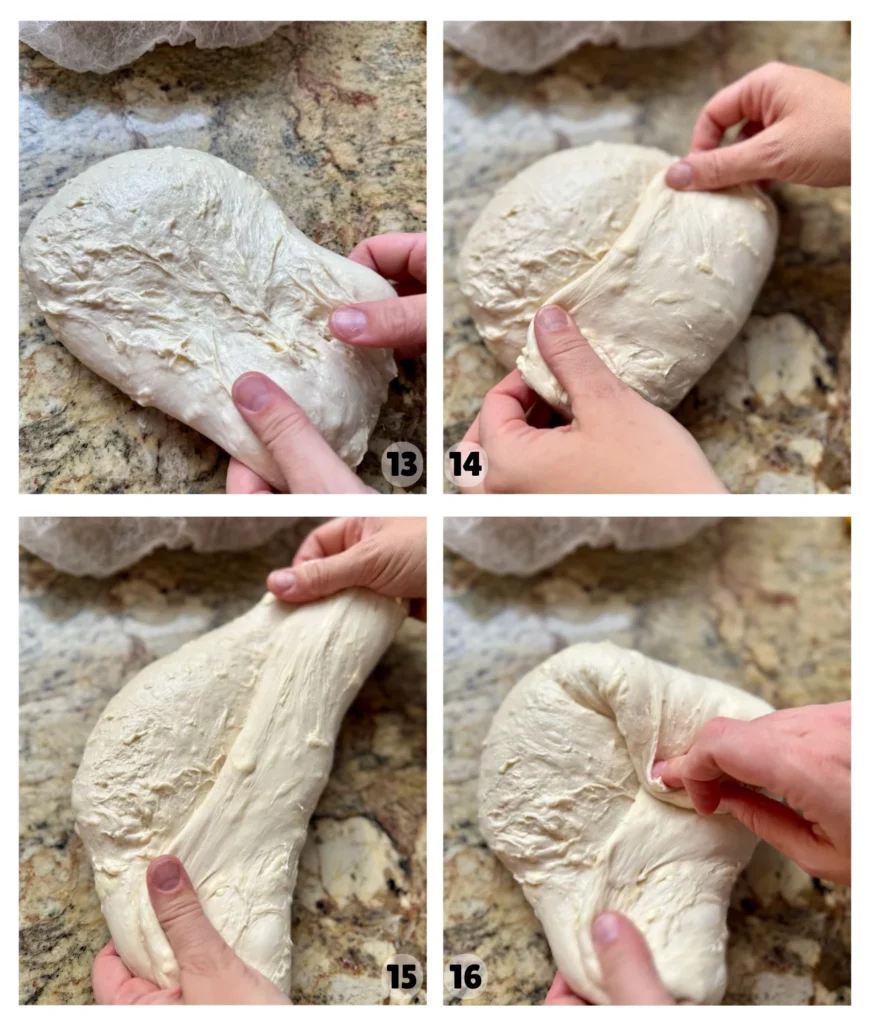
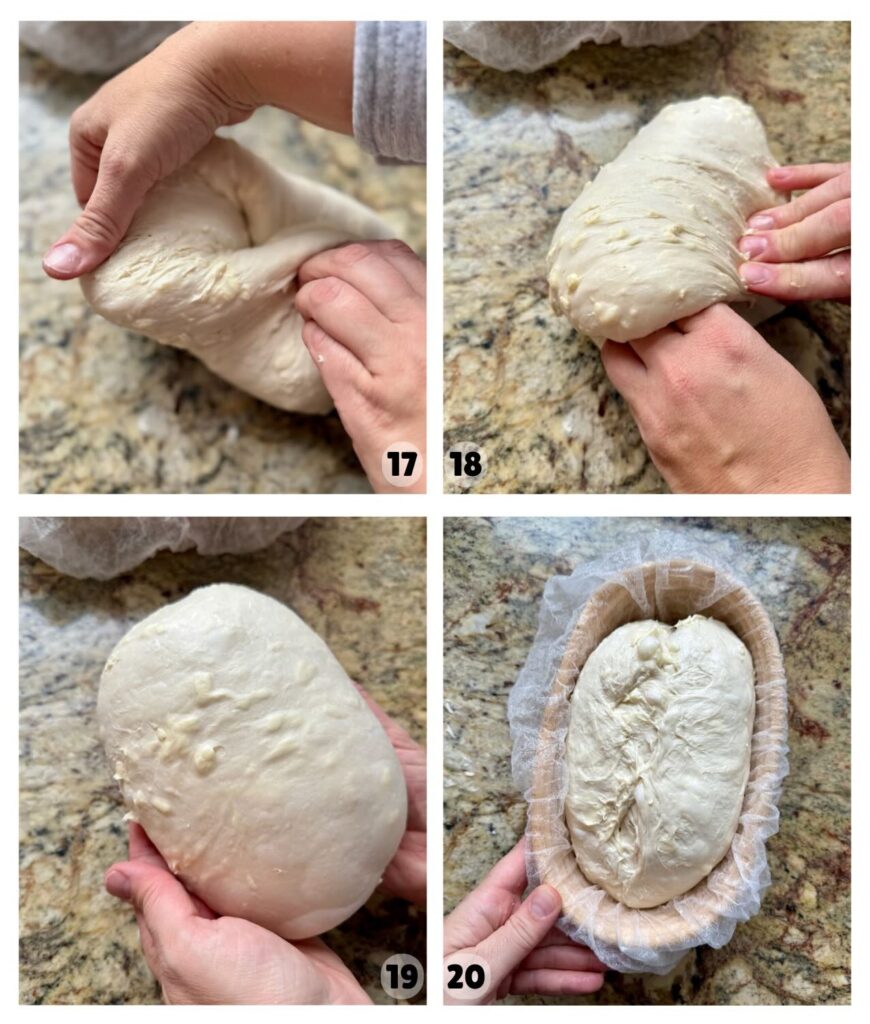
Step 5: Shaping. Pull the dough towards you and fold up to the top, repeating the process as you make your way around the dough (Images 13, 14, 15, 16, 17, & 18). Gather the bread into a circle (Image 19) and place in a prepared bowl or banneton lined with a kitchen towel or hair net (Image 20).
Cold Ferment and Proofing
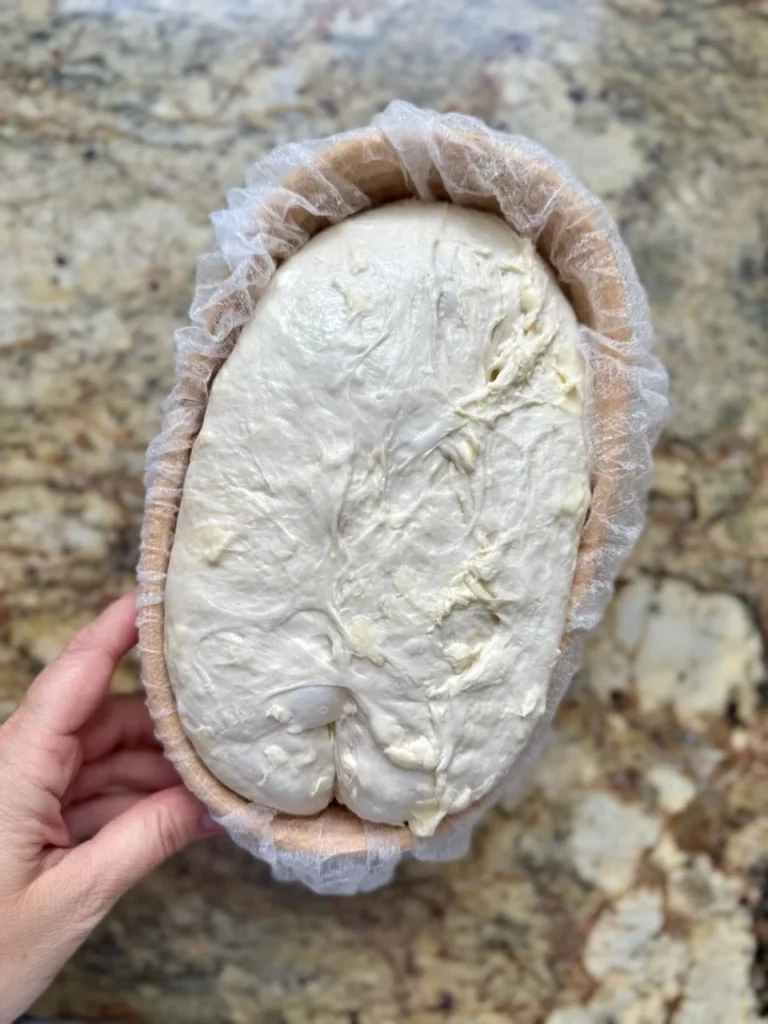
Step 6: Cold Fermentation. Cover the dough and refrigerate overnight or up to 12-18 hours.
Note: If you prefer to bake the loaf right away, let it proof a few hours in the banneton. Stick the dough in the refrigerator or freezer while the oven preheats. This chills the butter and makes the loaf easier to score. Then bake according to recipe directions.
Baking the Croissant Loaf
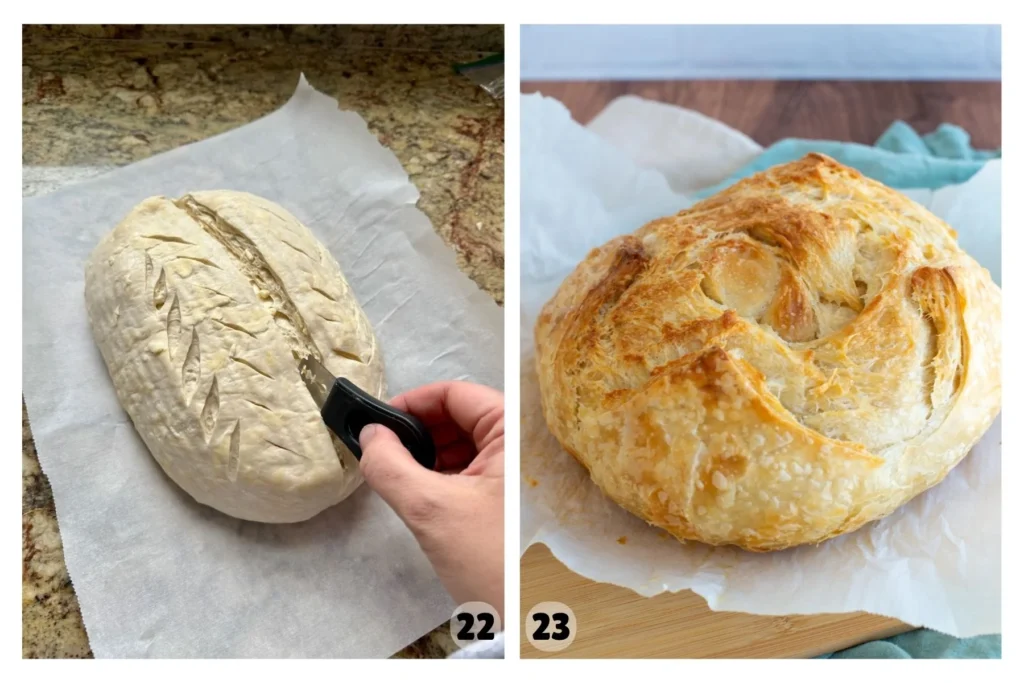
Step 7: Bake. Preheat a Dutch oven at 450°F for 20 minutes. Remove the sourdough loaf from the refrigerator. Dump it out on a piece of parchment paper and use a sharp knife or bread lame to score your loaf (Image 22). Remove the Dutch oven from the oven and carefully place the loaf into the Dutch oven. Decrease the temperature to 425°F and bake for 25 minutes covered and 20 minutes uncovered. Your Sourdough Croissant Bread is ready when it is a deep brown color and registers 195-200°F (Image 23).
Note: If properly proved, only a little butter will leak out of the dough as it bakes at these high temperatures. It gives a buttery, crispy crust that is delicious but could make a little bit of a mess if you don’t use parchment paper. If your dough is not properly proved, butter can leak out everywhere – so please follow the proofing notes.
Can I make this a Chocolate Croissant Loaf?
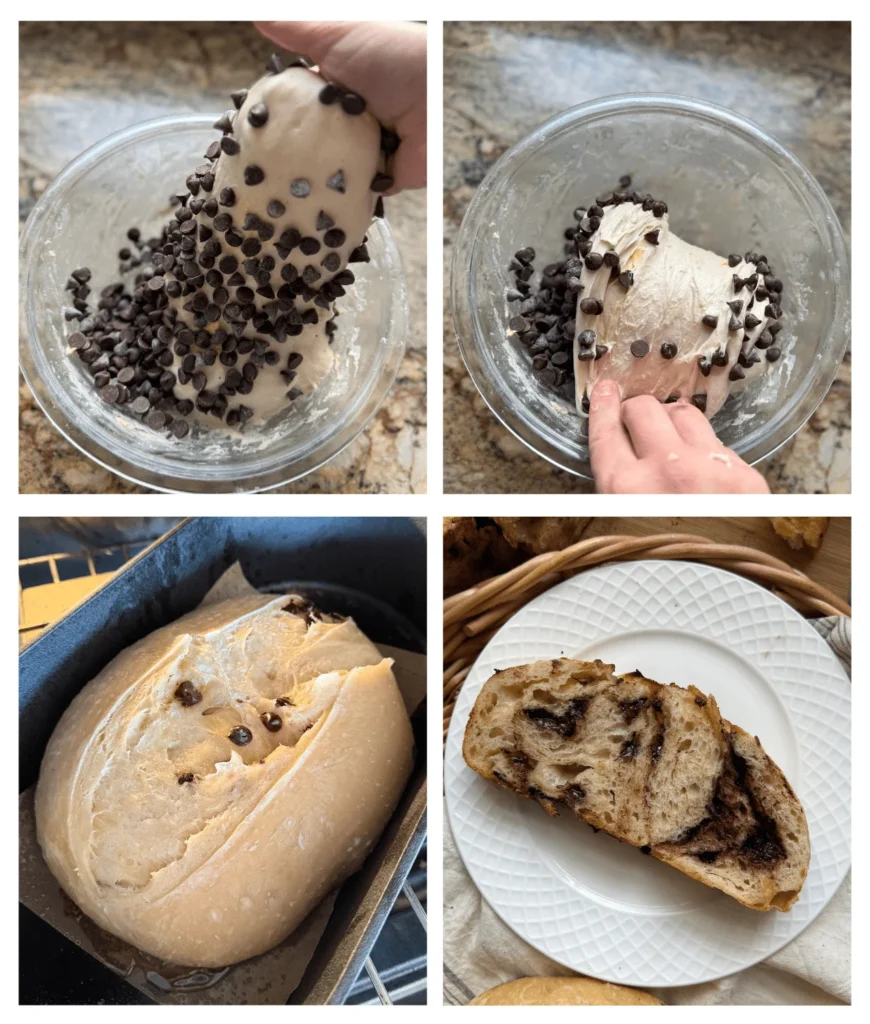
Yes! This makes a delicious chocolate croissant loaf. Add 200 grams of chocolate chips (I like semi-sweet) to the top of the dough right before the 4th stretch and fold. Stretch and fold the chocolate chips into the dough. Cover and let rest for 20-30 minutes. Add a 5th set of stretch and folds, incorporating the chocolate chips even more. Proceed with the recipe as outlined. This gives even distribution throughout the dough and makes for a delicious pain au chocolate-style croissant loaf.
How to Store Leftovers
After the sourdough croissant loaf has cooled completely, slice it up into pieces. Place sliced bread in a bag, push air out and freeze. This bread toasts up well straight from the freezer into the toaster or defrosts well to enjoy a slice later.
About the Author